G. Kalyan Kumar
These are times when geometric abstraction is revelling in a renaissance with a bulging audience at the art events. The show at Kiran Nadar Museum of Arts (KNMA) in New Delhi, located at DLF South Court Mall, Saket, was no exception.
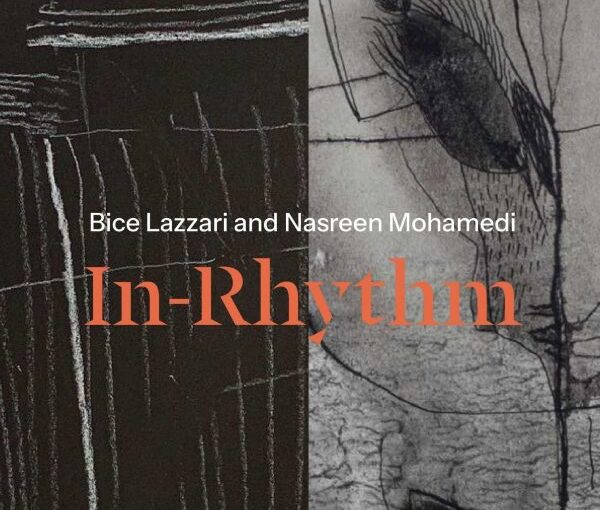
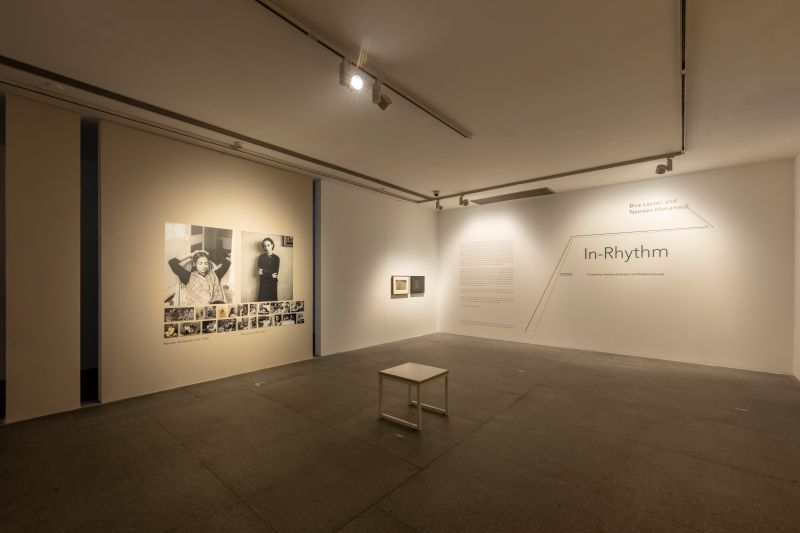
The In-Rhythm exhibition primarily captures the rare resonance in the works of two artists who lived in different times, continents and social spaces.
You have the works of Italy’s Bice Lazzari (1900-1981) and India’s Nasreen Mohamedi (1937-1990) on display.
The paired creators' creation that explored line, repetition, geometry, and restraint are open for artistic interpretations as specimens of the abstract geometry art in the train of modernism that has evolved through a series of movements including expressionism, impressionism and surrealism among others.
The Abstract art event has a companion exhibition named “Inheritors of Earth”; it echoes about the imperative of forging new holistic perspectives on human relation to plants and the wider ecology systems.
In-Rhythm repertoire
The In-Rhythm exhibition has been presented in partnership with the Italian Embassy Cultural Centre, New Delhi and Archivio Bice Lazzari in Rome. The show is curated by Andrea Anastasio, Director, Italian Cultural Institute; Roobina Karode, Chief Curator, KNMA; and Neha Tickoo, curator, of KNMA.
Opened on September 9, In-Rhythm will conclude on December 22. The showcased works are appealing, and the swelling audience seems to applaud the early minimalism and the somber shift towards unique forms that seek to elevate the experience with the visual language and structures that beam emotion, memory, and meaning.
Both Bice Lazzari and Nasreen Mohamedi demonstrate their resilience with geometric art and how they pushed the boundaries aesthetically in terms of both form and feeling.
Artistic kinship
It's interesting that the two late artists never met or encountered each other's work, yet their works in the decades of the 1960s, 70s and 80s developed remarkable similarities in approaches to line, repetition, geometry and restraint. They excel with best practices in line reacting to changing circumstances, making works appealing and compelling, and seeking comprehension beyond their biography sketches. Their works stand out as testimony of concentration, continuity and will.
The bright spot with In-Rhythm had been the conversation between the two artists, albeit with no influence-sparring, but gently expanding as a breezy tale of unexpected artistic kinship. One striking commonality with the duo may be their use of limitation not as a constraint but a subtle way of creating clarity, rhythm and emotion.
The pairing is also a study about shared engagement with reductive forms for expressing, thinking, resisting, and rebelling in the quest to remain free and autonomous.
The In-Rhythm show also opens new horizons to reflect on other pioneering female artists who engaged many aspects of geometric abstraction art. The show effectively connects Bice Lazzari and Nasreen Mohamedi to the galaxy of artists, including Hilma Klint, known for her radical, abstract, and geometric paintings featuring circles, spirals, and bold colour fields.
Other notables in the club had been Sophie Taeuber of the Dada movement, French artist Sonia Delaunay of the Orphism movement, and Agnes Martin, whose faint grids, delicate pencil lines, and subtle bands of colour reportedly also influenced Bice Lazzari in her meditative, minimalist abstract compositions.
Key takeaways from In-Rhythm
The deft hands create a language of reductive geometric abstraction as a movement that reads like musical compositions, converging rhythm, tension, and intentionality. The key takeaway of In-Rhythm is the interplay of precision and rhythm. However, here the precision is not a gagging type but unlocks new pathways to alternate architectures and stir up the viewer’s mind and intellect amicably. Their lines go beyond markings on space, as they stretch, fold, and extend the dance into the viewer’s vision.
Inheritors of Earth
The exhibition- Inheritors of Earth-draws its conceptual framework from the work of the noted Malayalam writer, late Vaikom Muhammad Basheer, titled Bhumiyude Avakashikal (Inheritors of Earth), which imagines humans, flora and fauna as co-custodians of the planet.
The exhibition curated by Premjish Achari sends a meaningful message to give up clichéd approaches and embrace plant life as a vibrant, parallel, and entangled world claiming its own rhythms, histories, and resilience. This is to be a rebuff to the prevailing attitude to the plant world as a passive backdrop to human experience. The exhibition effectively debunks the transactional ways of looking at plants and persuades us to unlearn old attitudes.
The call to action is to dwell within the vegetal world, observe their temporalities and embrace their rhythms and enter that texture into artistic practice. Overall, the exhibition explores themes of growth and decay, rootedness, migration, memory and ecological change. The thematic experience is accentuated by an array of paintings, photographs, drawings, videos and installations by various artists.
The exhibition succeeds in elevating the process to a seeking with meditative sensibility that looks at plant temporalities and histories traversing through botanical migrations. The big takeaway could be the call to look with plants rather than looking at them and reshape our imagination towards coexistence, humility and shared inheritance.
The show brings together artworks that engage with mangroves, forests, plantation crops, and urban trees as living entities shaped by histories of labour, caste, ecology, and care. The exhibition also asserts its interdisciplinary character by including poetry and audio narration by Manuel Mata and a seating installation by Sweety Chakma, with a reading room dedicated to works from Shared Ecologies’ archive.
Two different ways of looking at the world
In the words of Kiran Nadar, Chairperson, KNMA, “the concurrent exhibitions highlight two different ways of looking at the world with an invitation to pause, observe and reconsider.”
In-Rhythm introduces the audience to the quiet intensity of line, repetition and abstraction, revealing how thought, feeling and meaning splash in the restrained gestures. “Inheritors of Earth” awakens to a consciousness that redraws how we treat plants and the need to consider them as part of the histories and memories.
Together, the exhibitions exhort art lovers and audiences to look closely, think differently and start discovering unexpected connections.