
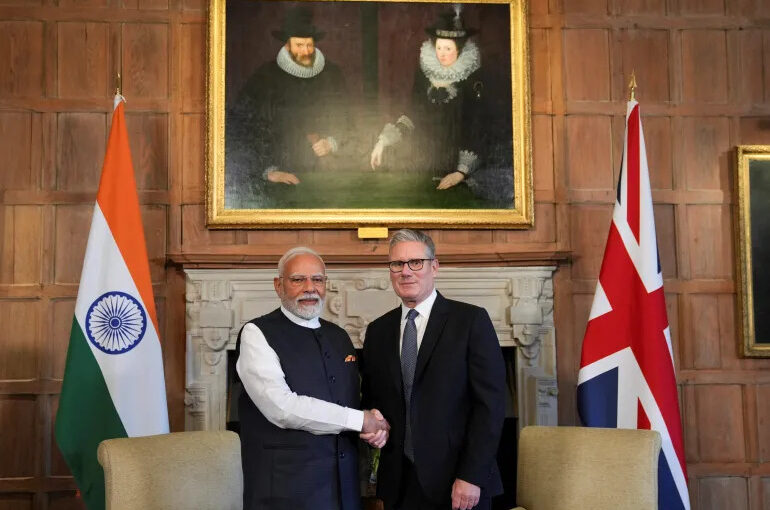
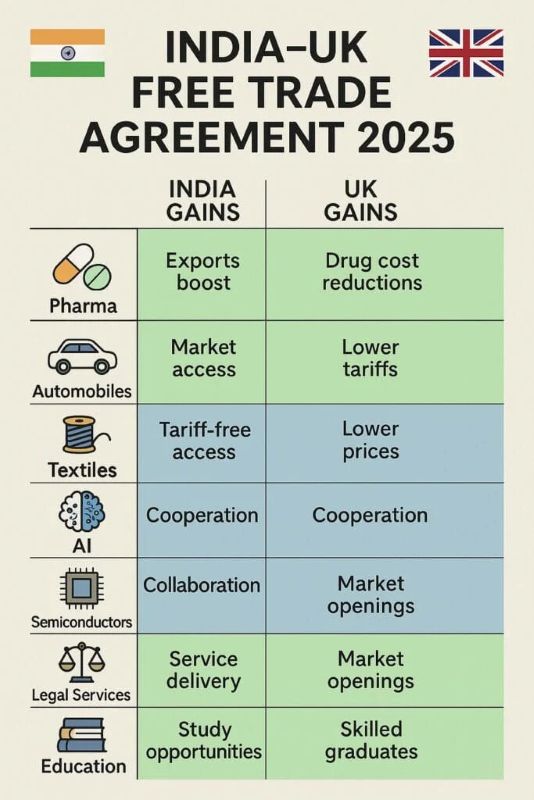
The UK-India Free Trade Agreement, also called the Comprehensive Economic and Trade Agreement (CETA) became operational on 15 July.
It is a shot in the arm for Indian industry and billed a transformative free trade pact in the context of a somewhat turbulent phase in trade front in the aftermath of the uncertainty caused by US tariffs on Indian exports.
On July 15, the first day of the CETA saw more than 50 export consignments worth over USD 140 million getting dispatched from ports, airports, Inland Container Depots (ICDs), Special Economic Zones (SEZs), and Indian manufacturing facilities.
Among the shipments included electronics, pharmaceuticals, engineering goods, gems and jewelry, and many other manufactured goods.
Steep reduction of dutyUnder the FTA, the UK will eliminate import duties on 99 percent of Indian exports—directly benefiting many labor-intensive sectors like textiles, leather, gems, and jewellery. Under the pact, India has reduced tariffs on 90 percent of UK goods, including slashing Scotch whisky and eased duties on premium automobiles.
The CETA establishes zero-duty or reduced tariffs across thousands of goods while enhancing mobility and service integration for professionals.
The free trade deal graces many vital sectors including garments, footwear, and leather goods. Under the FTA, the UK has eliminated duties that ranged between 12 percent and 16 percent, making Indian exporters more competitive over players like Bangladesh and Vietnam.
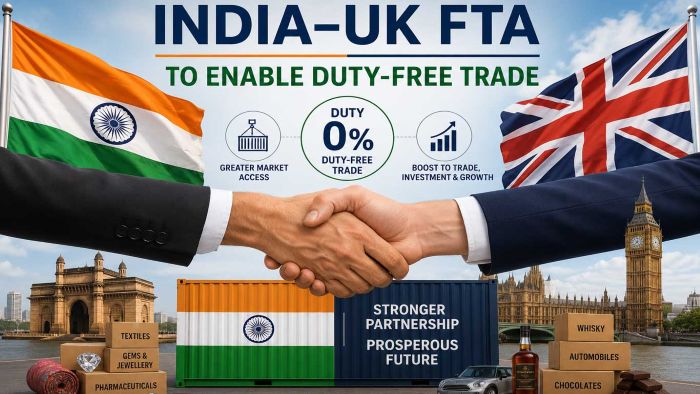 India-UK India FTA at a glance
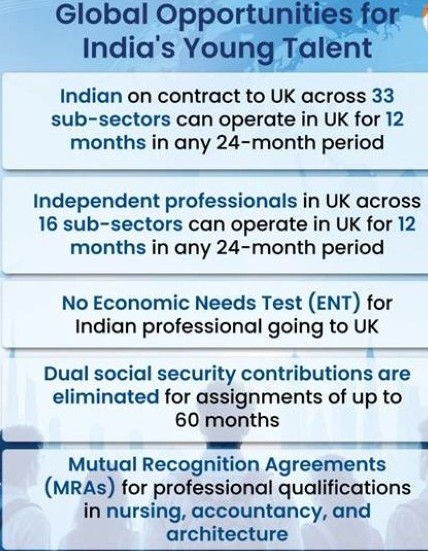
The FTA introduces a Double Contribution Convention, which exempts professionals on short-term assignments from dual social security contributions, significantly cutting costs. It also eases entry barriers for IT, finance, legal, and architecture professionals.
The FTA secures digital trade by allowing cross-border data flows without forced localization, salvaging proprietary source codes, and encouraging technology transfer.
Industry chambers upbeatIndustry chambers such as FICCI and ASSOCHAM have welcomed the India–UK Comprehensive Economic and Trade Agreement (CETA). They hailed the trade deal, which grants zero-duty access to 99 percent of Indian exports, as a milestone that will boost bilateral trade to $115–$120 billion by 2030.
The Federation of Indian Chambers of Commerce and Industry, FICCI, noted that the trade pact's immediate elimination of tariffs would drop rates like 12 percent on textiles and 16 percent on footwear to zero. This will certainly add more impetus to Indian manufacturers opening an equitable environment for competition with regional rivals.
Job creation in many sectorsIn the view of ASSOCHAM (Associated Chambers of Commerce and Industry of India), the impact projections include the potential to create 700,000 to one million new jobs in sectors like engineering goods, textiles, leather, marine products, and chemical industries.
According to the technology industry chamber NASSCOM, the digital and services provisions in the FTA alongside the operationalization of the Double Contribution Convention (DCC) will be a big relief to Indian professionals on short-term UK assignments, as it saves them from paying dual social security contributions up to five years.
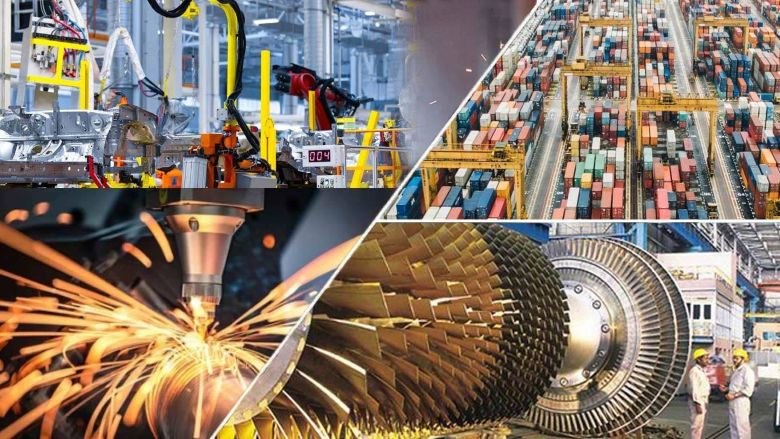 Boost for engineering goods sector
However, the Chambers were unanimous in urging the industries and exporters to explore the full potential of the FTA, which depends on how far Indian MSMEs meet product quality, certification, rules of origin, and global sustainability standards.
Ticklish issues, such as carbon border taxes, data flow regulations, and investment protection frameworks, require broad discussions to reach a consensus.
Government procurement liberalisedIt features India's first comprehensive government procurement chapter in an FTA, allowing UK suppliers to confidently bid on Indian transport, healthcare, and energy contracts.
A large number of queries are coming to exporters in labor-intensive sectors such as apparel, leather, footwear, and textiles from UK buyers, and brands are ready to take advantage of duty-free access on a wide range of Indian products.
Exporters believe the elimination of tariffs from day one on most products would improve India’s competitiveness in the British market and open up a level playing field with competitors such as Bangladesh and Vietnam and also an edge over suppliers from countries such as China without any preferential access.
Broadly, the UK-India trade deal covers goods, services, digital trade, investment, professional mobility, and customs cooperation.
Optimism by Industry Trade BodiesMithileshwar Thakur, Secretary General of the Apparel Export Promotion Council (AEPC), observes that the long wait is over and the apparel industry is completely geared up to take full advantage of duty-free access to the important UK market.”
However, Thakur noted that tariff reductions can improve India’s competitiveness, but that does not assure overseas buyers will offer higher prices to exporters because customs duties have fallen.
In the words of Ajay Sahai, Director General of the Federation of Indian Export Organisations (FIEO), the implementation of CETA is a watershed moment for bilateral commerce.
Exporters across sectors have already aligned their operations to leverage preferential market access. He is confident that export momentum will gather pace over the coming months as UK buyers factor duty savings in their sourcing decisions.
From the leather and footwear industry, many exporters expressed the hope that the reduced import duties from 4.5 percent on certain footwear categories to zero would bolster India’s position in the UK market.
The agreement would increase India’s leather and footwear exports to the UK by around 10 per cent, although he did not expect an immediate surge in shipments.
Compliance made easyOn the certification front, the government has largely put in place the necessary framework and authorized agencies to issue preferential certificates of origin and also enabled self-declaration-based certification.
Ajay Sahai expects the digital certificate-of-origin system, together with self-certification and importer’s knowledge provisions, will minimize compliance hurdles as businesses begin using the agreement productively.
Boost for marine products and pharmaIn the marine products area, frozen shrimp and fish will enjoy 100 percent duty-free access and take out hefty tariffs like 20 percent. The deal also enables securing zero-duty access for 97 percent of processed food tariff lines, helping suppliers of Indian fruits, honey, and bakery items.
The gain for engineering goods and auto components is substantial, as the UK eliminated import duties up to 18 percent on engineering goods and auto parts. This bolsters market access, and manufacturers can integrate well into UK supply chains.
Among the significant attractions of the FTA with the United Kingdom is the goal of doubling bilateral trade to US$112 billion by 2030. This will deliver an estimated economic boost of US$6.4 billion to the UK economy alone by 2040.
 Advantage professionals
The FTA liberalizes over 115 service sub-sectors, including IT, healthcare, and engineering. It is a win-win situation for the services sector too, with the Double Contribution Convention exempting professionals on short-term assignments from paying dual social security contributions up to 60 months.
The removal of UK tariffs will also deliver Indian chemical and pharma exporters a significant edge in competitive pricing within the British market.
By combining tariff reductions with service commitments and digital trade provisions, the CETA broadens the scope of India–UK economic cooperation, going beyond the traditional merchandise trade contours.
Overall, the pact also underpins the long-term India-UK Vision 2035, cementing a trust-based economic partnership that aims to fortify India's role in global supply chains.